
Knechtel Restores Order at Deutschlandring THR
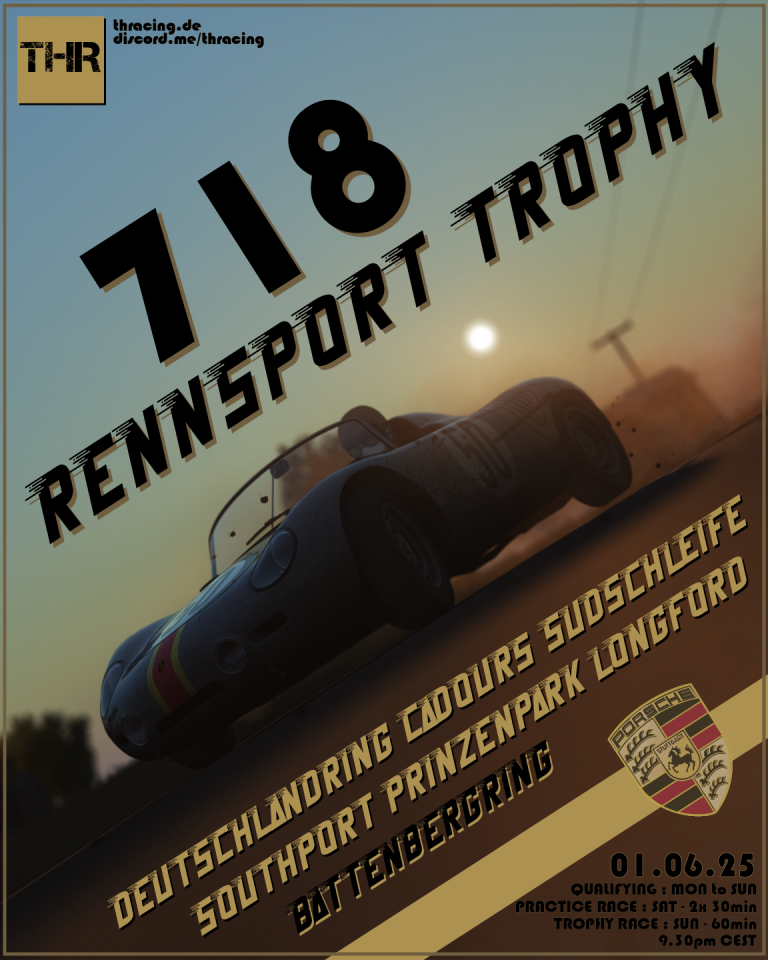
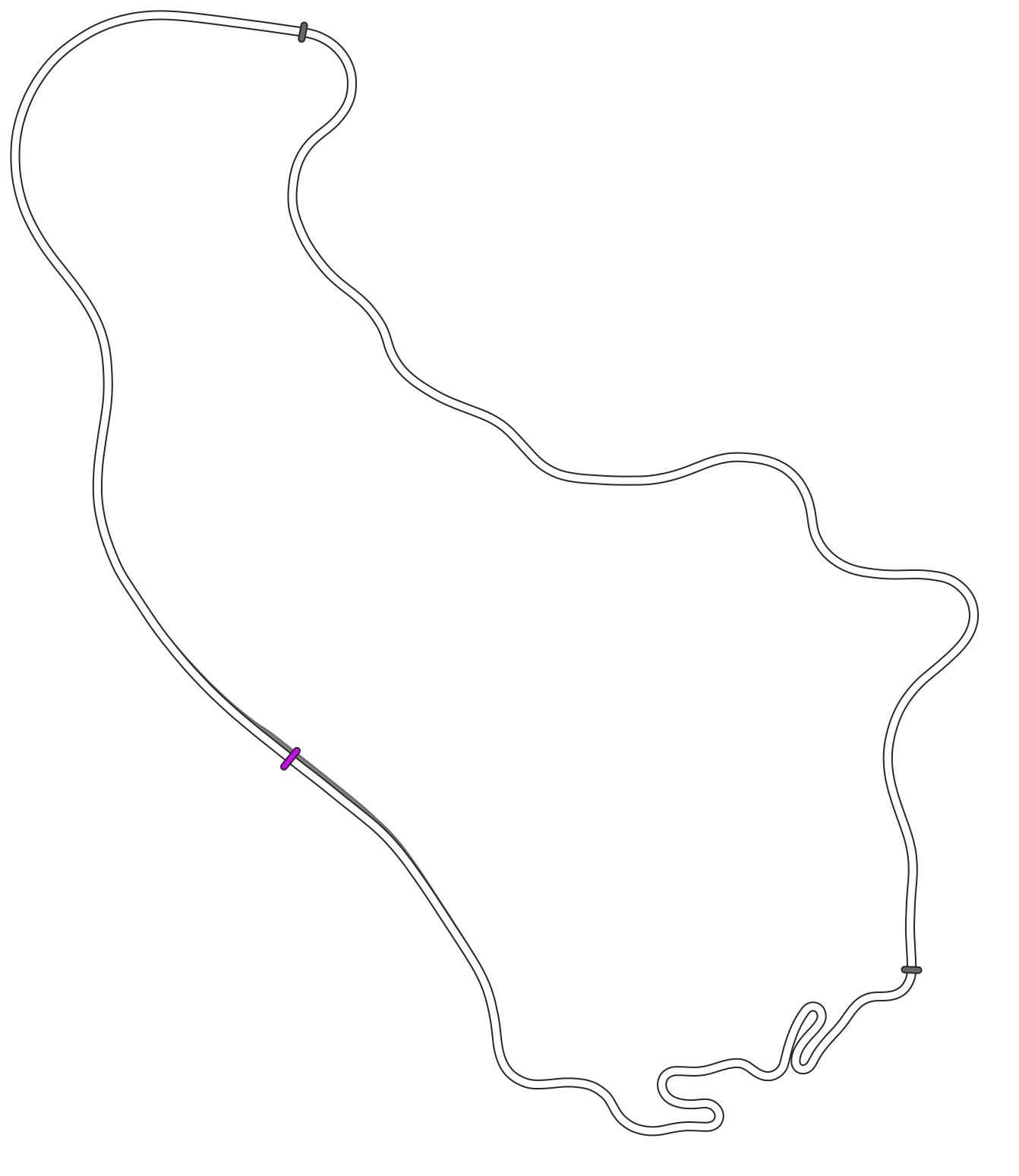
Valentin Knechtel overcame a brief loss of the lead to win the opening Championship race at Deutschlandring THR, with FMG recovering strongly for second and SDH-M ~ HappyKojot taking third in a hard-fought 15-lap contest for the Porsche 718 RS 60 Spyder field.
A momentary interruption
There was little doubt, in the end, about the authority of Valentin Knechtel's victory at Deutschlandring THR. The German led on 14 of the race's 15 laps and brought his Porsche 718 RS 60 Spyder home first after a race which had enough movement behind him to give the result proper weight.
The exception came early. Knechtel lost the lead on the second lap, when incidents during the lap coincided with his slipping from first to second. SDH-M ~ HappyKojot inherited the advantage and held it across the line to complete that lap. But the Pole's spell in front lasted only until the next tour. An incident on lap three coincided with HappyKojot dropping back to second, and Knechtel was again ahead.
Thereafter the winner imposed a steadier rhythm upon the race. It was not a processional afternoon - the closely matched Spyders kept the order in a state of argument through much of the field - but Knechtel's return to first proved decisive. He completed all 15 laps to take the first Championship race of the season, and in doing so left Deutschlandring THR as the Championship leader.
FMG's return to second
FMG's second place was earned the harder way. Running second at the beginning of lap two, the British driver fell to fifth during a lap that included incidents. From there he rebuilt his race to regain the runner-up position by the finish, a recovery which gave Knechtel no easy companion at the head of the classification.
FMG also set the fastest lap, his 4:03.758 being only 0.197 seconds quicker than Knechtel's best. It was a useful indication of the pace available to the second-placed man, even if the race itself had already been shaped by the opening exchanges and Knechtel's prompt restoration of the lead.
HappyKojot, having made the only serious interruption to Knechtel's command of first place, completed the podium in third. Flashor was fourth and Nat Stevenson fifth, both completing the full distance in the increasingly settled order behind the leaders.
The contest behind the podium
The most persistent uncertainty lay further back, where Florian Masse, Adam Celárek, Flashor and Potatohedron were repeatedly drawn into the same moving group. This was not a battle that could be reduced to one duel. Positions changed often enough to make the middle part of the race a matter of patience as well as pace.
Masse's race was especially unsettled. On lap four, incidents involving the Frenchman at Große Schleife, 18 and 20 coincided with a fall from third to tenth. He then found himself in extended contention with Flashor and Potatohedron, while Celárek became another recurrent opponent. By the middle stages, Masse and Flashor had exchanged the advantage more than once; Potatohedron also ran ahead of Flashor before Flashor recovered the place.
The final three laps brought Masse and Celárek together once more. Celárek emerged ahead of Masse, meisterJaeger and Potatohedron by the end of lap 13, only for Masse to reclaim the advantage over the Czech on lap 14. On the last lap Celárek again moved ahead, taking seventh at the finish while Masse followed in eighth. Neither had had a quiet race, but both saw the full distance through.
Cerny's measured recovery
Jaroslav Cerny provided the other notable upward movement. Recorded as low as 13th after lap two, the Czech worked back through the congestion to finish sixth. His advance placed him clear of the late Masse-Celárek dispute, and it was a substantial return after an early position from which a top-six result had appeared remote.
Around him, the race retained its restless character. A field of 22 identical Porsche 718 RS 60 Spyders had offered small margins and frequent changes of company, particularly in the first half. Yet the winner had found the one commodity that mattered: enough clear running after lap three to turn an interrupted beginning into a controlled result.
For Knechtel, the opening round supplied more than the customary first success of a new campaign. It established him as the reference point in a field whose equal machinery ensured that every lapse in the order was immediately contested. FMG's speed and recovery, and the pressure of the crowded middle group, suggested that the next four races would demand the same composure that carried Knechtel through Deutschlandring THR.